




The role of the K-12 Technology Leader has never been more complex — or more important!
Today’s K-12 technology leaders are operating in a completely different reality than they were not very long ago. Budgets are tighter, cybersecurity threats are increasing, AI expectations are accelerating, device fleets are aging, and classrooms have become more dependent on technology than ever before. At the same time, district technology teams are being asked to support increasingly complex technology ecosystems with limited staffing and growing operational pressure.
Everything Matters
Every support ticket, every operational decision, every lifecycle decision — they now impact something much larger: instructional continuity, lifecycle planning, and long-term sustainability. Leaders juggle all of these hard choices while managing teams that are asked to do more with less.
According to the CoSN State of EdTech Leadership Report, 65% of districts cite insufficient cybersecurity staffing as a major challenge while districts continue managing increasingly complex technology environments.
Welcome to the “Device Refresh Cliff”
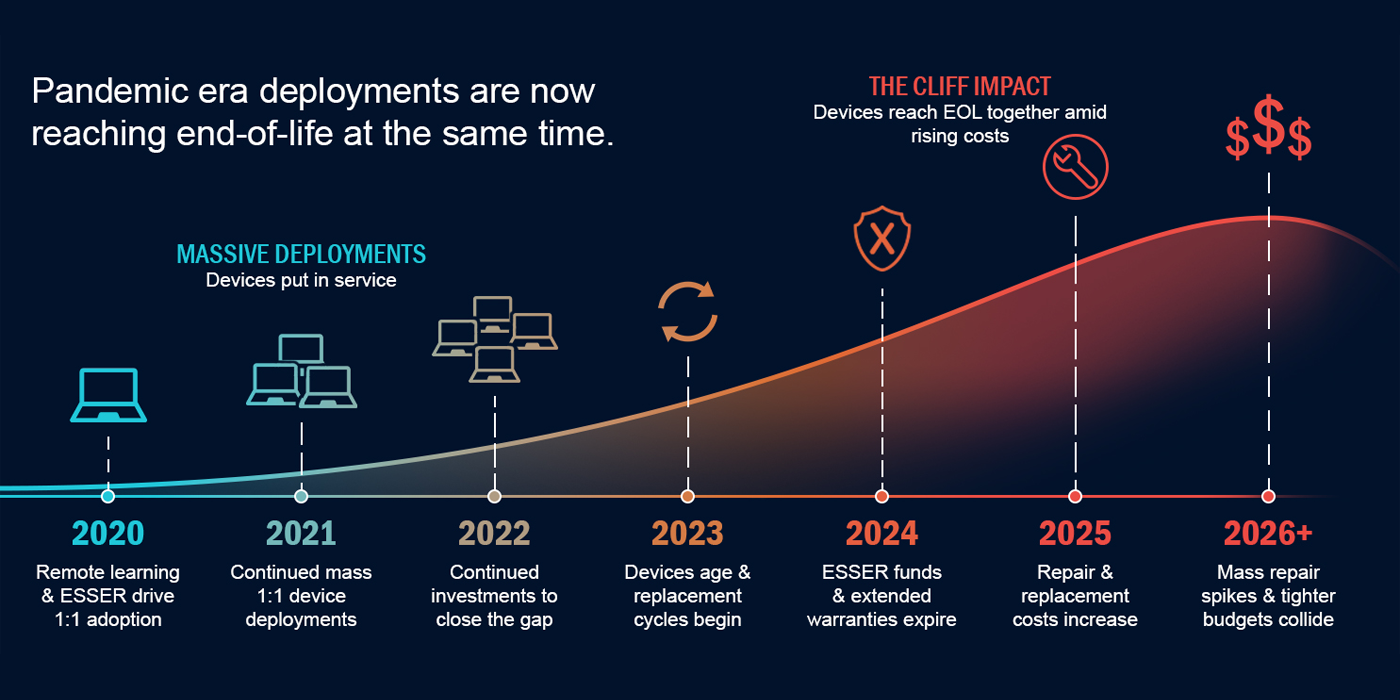
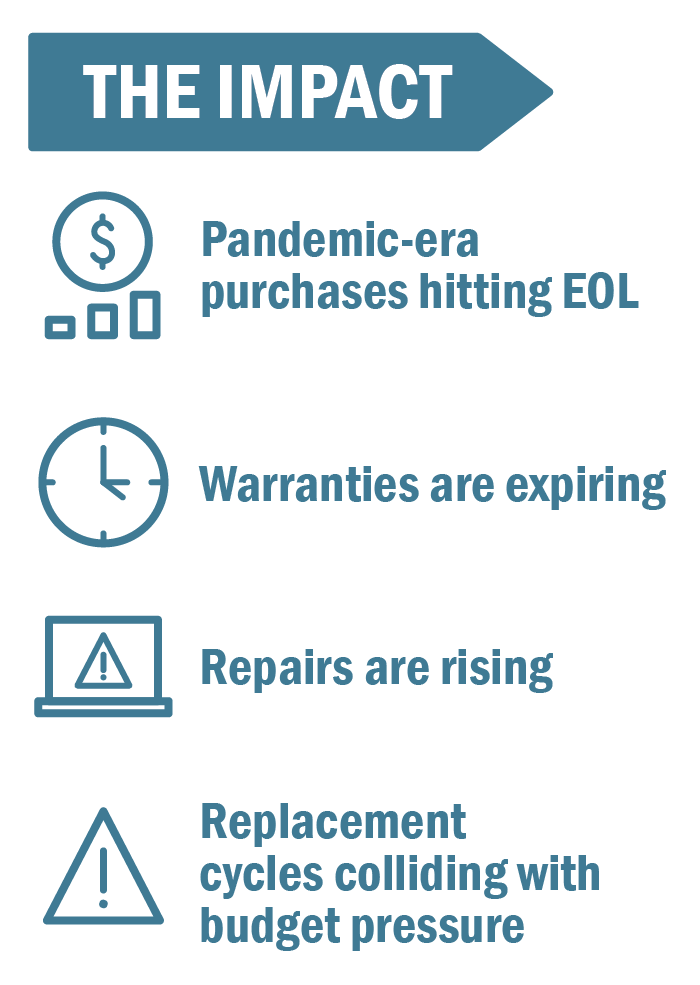
During the pandemic, districts moved fast to get devices into student’s hands. Now these same devices are all aging in unison and districts will face entire fleets that need to be replaced. Warranties are expiring, repair rates are rising and budgets no longer have the flexibility they once did.
One Technology Leader shared: “A few years ago, we had funding and didn’t worry as much about device lifecycle planning. We would buy additional devices when they were needed. Now, every dollar has to be accounted for and we need to quantify my recommendations.”
Why Traditional ROI is No Longer Enough
Traditional Return on Investment (ROI) focuses on extended device lifecycle, financial repair savings, efficiency in asset management, replacement reduction, warranty impact and potential buy back alternatives.
But in today’s world, a broken device is more than a repair ticket. Return on Instruction is the educational value schools preserve when devices stay available, functional, and ready for learning.
Return on Investment (ROI) is a financial metric used to evaluate the efficiency or profitability of an investment. It measures how much profit or loss is generated relative to the initial cost of the investment.
It looks beyond the cost of a broken screen or damaged keyboard and asks a bigger question: what happens to teaching and learning when students lose access to the tools their lessons depend on?
From ROI to Return on Instruction
Return on Instruction does not replace traditional ROI. It gives schools a more complete way to understand it. A device that lasts longer saves money, but a device that stays in service also protects instructional time, teacher planning, student focus, and access to digital learning tools.
The Hidden Cost Most Districts Don’t Measure

A repair invoice is visible, but lost instructional time is harder to measure. Lost instructional time increases teacher frustration, IT department strain, student disengagement, and the interruption that happens when a planned digital activity cannot happen because a student’s device is unavailable. These costs may be less obvious, but they affect the rhythm of the classroom and the experience of students over time.
Attention is one of the clearest examples. Learning depends on students being able to focus, process information, and stay engaged with a task. As one article explains, “For learning to occur, students must actively focus their attention on new information so it can be processed in working memory and potentially stored in long-term memory.”
When devices fail, disappear into repair cycles, or interrupt a lesson, the disruption can compete directly with that focus. Extended device downtime can affect students’ performance on assignments, tests, and class participation—especially in districts with a high reliance on technology for learning.
The Two Costs of Preventable Issues: Direct and Opportunity
Every hour spent on fixing a break is an hour NOT spent on cybersecurity, instructional enablement, data analytics, etc. Operational drag can affect more than the Technology Team – it impacts the entire district. In this day and age, protection is not just about preventing damage, it’s about creating predictability.

Tech Leaders Need Predictable —
- Repair rates
- Lifecycle planning
- Budget forecasting
- Classroom uptime
- Operational workload
District Leaders depend on all of these components in order to produce the right technology strategy for their schools. Establishing predictability in each of these areas will allow districts to evaluate their future needs and prepare to meet them in advance. Increased predictability also means increased efficiency, earlier budget planning with accurate costs, and saved time that can now be put toward other strategic initiatives.
A Device Lifecycle Strategy That Creates Predictability
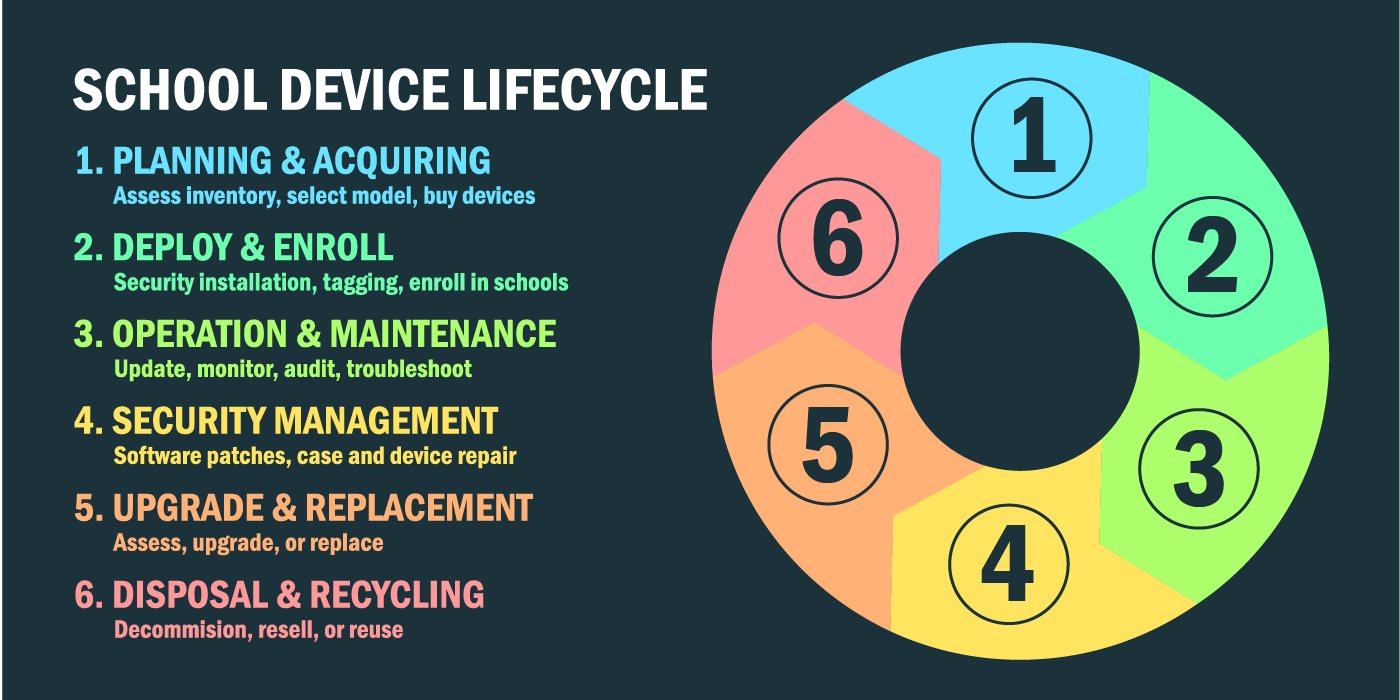
Planning a device lifecycle management strategy begins with the end in mind; extending a device lifecycle can maximize district budgets. A recent CoSn study cites that each year, 8% to 25% of devices in school districts must be replaced. That comes out to be a large expense for most districts, so avoiding device breakage is key. A case study with Capistrano Unified School District found a 70% reduction in breakage in the group of students armed with our Rugged Pro Cases. A Rugged Case can add up to 4+ years to your device’s lifespan.
Having the right protective case is critical, but cases can only protect when they stay on. That is why InfoCase’s New Product, the PermaLock™ XP, locks directly onto the device and prevents removal except by a Technology Professional with a specific tool. As our newest Rugged Case, this product offers schools even more advanced protection — with a screw that keeps the case firmly attached to the device, the PermaLock™ XP brings an end to lost cases.
For repairs that do occur, InfoCase has InfoCare360 for efficient asset tracking that helps with device management and reduces time spent by technology professionals on management — freeing them up for other more strategic initiatives.
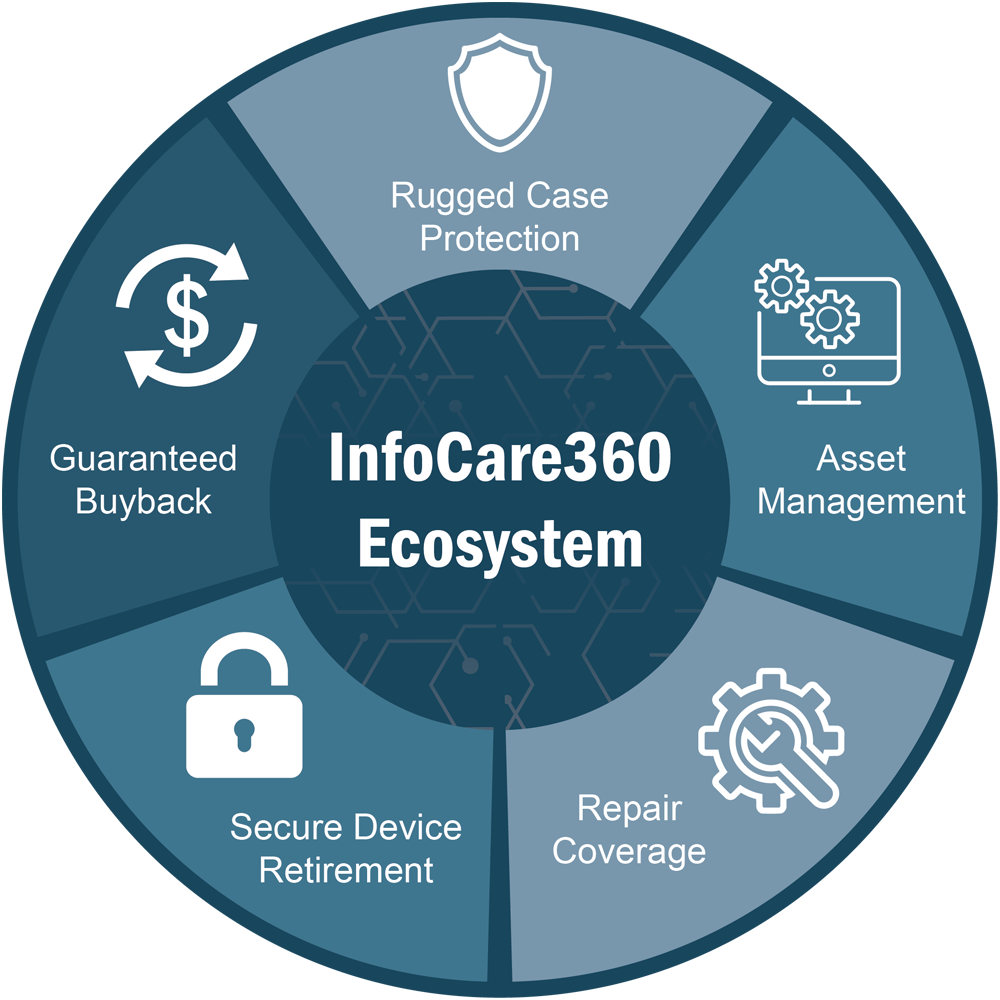
InfoCare360 offers:
- Rugged Case Protection
- Device Asset Management
- Device Repair
- Safe and Secure Device End of Life Retirement
When Districts buy the PermaLock™ XP Case, InfoCare360 guarantees a Buy Back on your devices. That is predictability and a higher ROI rolled into one program. Measure the impact of InfoCase on your ROI with our ROI Calculator.
EdTech Leaders Must Think Like CFOs in 2026

The Device Refresh Cliff is here and traditional ROI is no longer enough — every budget dollar spent must be justified. Technology Leaders will want to measure Return on Instruction to calculate both hard costs and opportunity costs. Understanding the impact of classroom disruptions is key to gaining a clearer picture of total investment and will help leaders leverage predictability to lower costs and increase efficiency.
Technology leaders will want to be prepared for the future of education. Countering contemporary problems and restrictions in K-12 is the most important part of thinking like a CFO in 2026 — the key is understanding the importance of both Return on Investment AND Return on Instruction.